A Self-Guided Architecture Walk Through Albany's Historic Streets
Three compact districts, a state capitol you can tour for free, and a riverfront that repays an afternoon — here is how to walk Albany's buildings in a day.
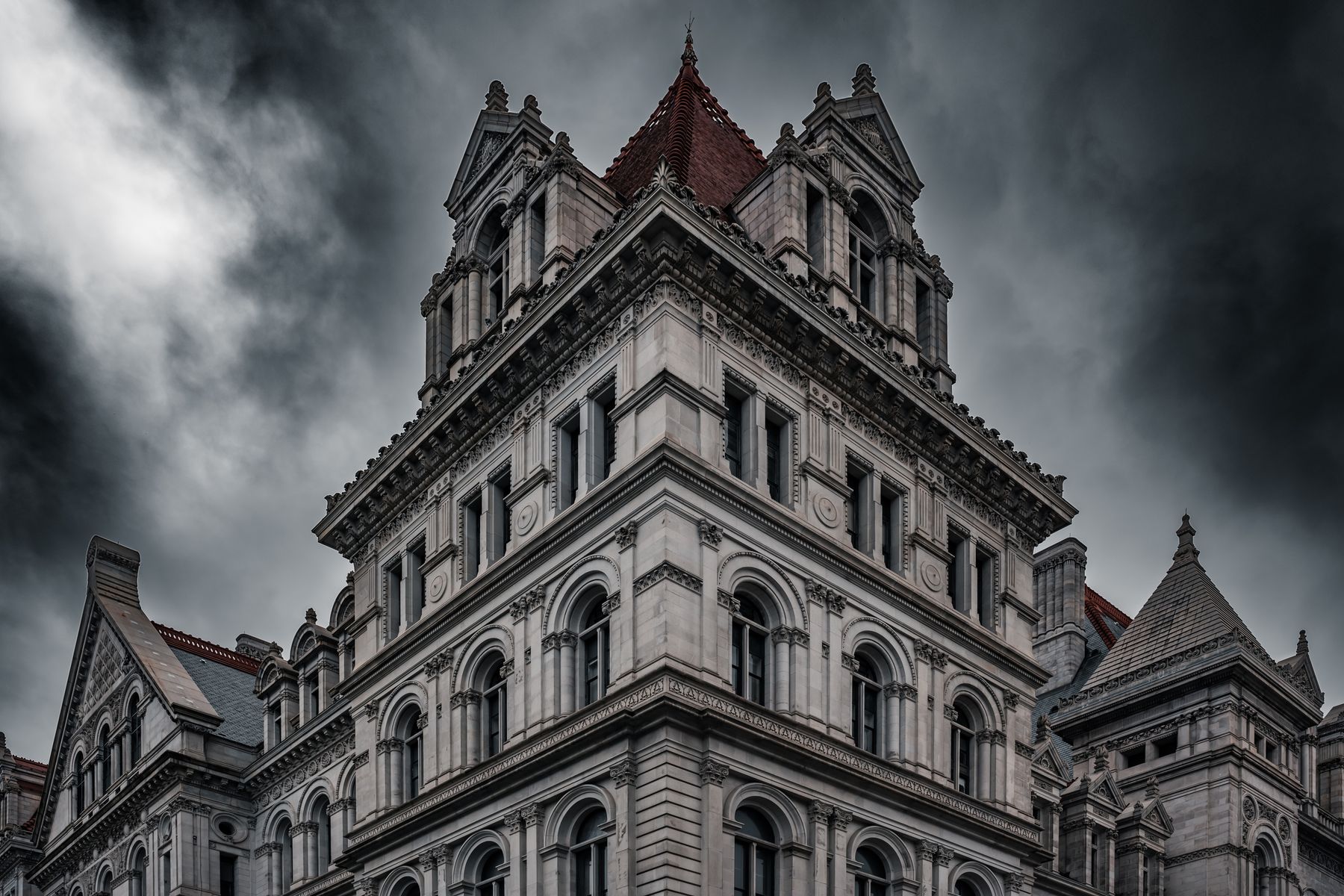
Start on State Street: the Capitol and the grand civic set piece
Begin at the New York State Capitol at the head of State Street, a five-minute walk uphill from the Albany-Rensselaer rail station via the pedestrian bridge and Broadway. The building took decades to finish, which is why the south facade reads Romanesque and the north end looks French Renaissance — pierce the interior to see the carved stone staircase, then walk east downhill past City Hall and the 19th-century banks of lower State Street toward the river. Weekday mornings are quietest; the Capitol visitor entrance is on the State Street side and guided tours run on weekdays, so check hours before you go.
Turn south at Broadway and you reach the Empire State Plaza, a 1960s modernist complex of marble towers and a quarter-mile reflecting pool. Love it or not, it is the most photographed site in the city, and the observation deck of the Corning Tower is free on weekdays. Cross the plaza to the New York State Museum at the Madison Avenue end — free admission, good restrooms, and a sensible place to break for coffee. Then work north up Eagle Street, where the terraced 19th-century townhouses were rebuilt in the 1970s and now hold restaurants and small offices.
Centre Square and the Dutch inheritance
Walk west along State Street to Pearl Street and the small plaza at Centre Square, the crest of the original 17th-century Dutch town. The pointed tower of the First Church in Albany, a 1790s building on North Pearl Street, marks the spot, and the surrounding blocks hold brick commercial buildings from the 1830s onward. This is a fifteen-minute stroll at most, but it explains the street plan: Albany grew up a hill and downhill to the Hudson, which is why every route here involves a slope. Stop at the corner of State and Pearl for the view back toward the river.
Head north on Pearl to Clinton Avenue and the Ten Broeck Mansion, a 1790s Federal house with a garden, open for tours Thursday through Sunday afternoons in season. The surrounding Arbor Hill streets are ordinary residential Albany — row houses, corner churches, mature street trees — and walking them is a straightforward way to see how the city lives outside its civic core. It is roughly half a mile from Centre Square; allow twenty minutes each way on foot. Afternoons in May, June, September and early October give the best light and the mildest temperatures.
Hudson waterfront and the warehouse grid
Come back downhill to Broadway and Quackenbush Square, where the Albany Heritage Area Visitors Center sits in a former pump house. From there, follow Broadway south under the interstate to the Corning Riverfront Preserve, a paved path along the Hudson with the river on one side and the remains of 19th-century warehouses on the other. The walk north to the USS Slater, a preserved Second World War destroyer escort moored off Quay Street, takes about twenty minutes; the ship is open for tours seasonally. Skip the waterfront at dusk in winter — the path is exposed and the wind off the river is sharp.
Inland, the blocks around North Broadway and Columbia Street hold the densest concentration of intact 19th-century rowhouses, including a stretch of handsome brownstones with original ironwork. This is the part of the walk to slow down for. If you want a base near the start, book in the downtown core around State and Broadway, where the big chain hotels cluster within a few minutes of the Capitol and the rail station; for a quieter, more residential feel, look at the Lark Street and Washington Park area, a twenty-minute walk west, where smaller guesthouses sit among the 19th-century parkside terraces.
Practical sequence and what to leave out
A realistic day is Capitol and State Street in the morning, the plaza and state museum before lunch, Centre Square and Ten Broeck in the early afternoon, and the waterfront in the late afternoon — around four miles on foot, with the slopes the main effort. Wear proper shoes: the brick sidewalks of downtown and the granite steps of the plaza are uneven. Note that much of downtown empties after office hours, so plan dinner on Lark Street or in the Warehouse District around Broadway and Hudson Avenue rather than on State Street itself.
Skip the guided bus tours and the suburban malls; almost everything worth looking at is inside a two-mile loop. Parking downtown costs money during business hours, so use the CDTA buses or walk from a downtown hotel. If you have a second day, take the short drive west to Washington Park, laid out in the 1870s, and the brownstone streets around it — the best surviving piece of residential Albany and a good place to end a weekend.
Questions, answered
How long does the architecture walk take?
Most people cover the Capitol, the plaza, Centre Square and the waterfront in five to six hours on foot, about four miles with several slopes. Spread it across two half-days if you want time inside the state museum or a Capitol tour.
When is the best time to visit Albany for walking?
Late May through June and September into mid-October give the mildest temperatures and the best light on the stone facades. July and August are hot and humid on the exposed plaza; winter is cold and the waterfront path is windy, though the Capitol and museum remain open.
Where should I stay for this route?
The downtown core around State and Broadway puts you within minutes of the Capitol and station. The Washington Park and Lark Street area is quieter and more residential, a twenty-minute walk west, with guesthouses among the 19th-century terraces.
Doing good is the business: every booking through Albany Eco funds one verified tonne of carbon removal — same room, same price, no markup.
Start Your Search