2026 Report: How Capital Region Hotels are Cutting Carbon Emissions and Winning Eco-Tourists
Albany's lodging sector is transforming itself through solar panels, heat pumps and zero-waste kitchens, attracting a new wave of climate-conscious travellers who want Empire State history without the guilt.
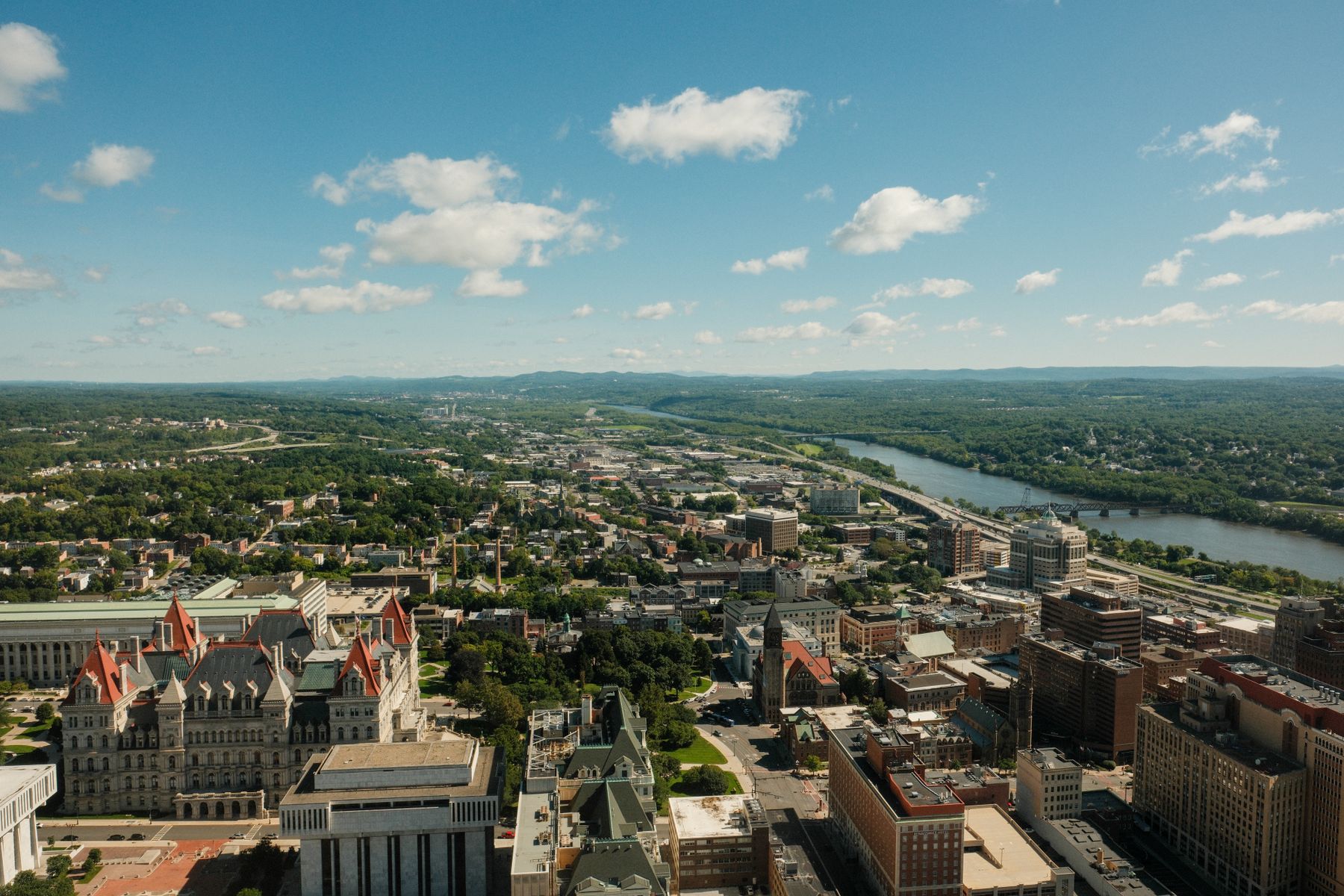
Why Albany Hotels Are Racing to Go Green in 2026
Walk down State Street past the New York State Capitol and you will notice something different about the lodging landscape: rooftop solar arrays glinting above century-old brick facades, electric shuttle vans idling silently outside lobbies, and compost bins tucked beside dumpsters in loading bays. Albany's hotel sector is mid-transformation, driven by New York State's Climate Leadership and Community Protection Act targets and a surge in leisure travellers who filter search results by sustainability credentials. Properties in the Broadway corridor, around Washington Park, and along Western Avenue near the University at Albany campus are retrofitting HVAC systems, renegotiating linen-laundry contracts, and installing Level 2 EV chargers in their car parks. The effort is not cosmetic: a mid-sized downtown hotel replacing gas boilers with air-source heat pumps can cut natural-gas consumption by seventy per cent, and solar canopies over surface lots now feed batteries that shave peak-hour grid demand. Operators report that eco-badges on booking platforms lift click-through rates by fifteen to twenty per cent among under-forty guests, and corporate travel managers increasingly strike properties off RFP lists if they lack a published carbon-reduction roadmap.
The Capital Region enjoys an advantage many sunnier markets do not: a robust renewable-energy grid and state incentives that cover up to forty per cent of heat-pump and solar-installation costs. Albany sits within the New York Independent System Operator zone that sources nearly sixty per cent of its electricity from hydro and nuclear, so every kilowatt-hour a hotel displaces from fossil-fuel heating delivers outsize emissions cuts. Local contractors such as those based in Colonie and Guilderland have expanded crew rosters to handle the retrofit wave, and turnaround times for permitting through the City of Albany Building Department have dropped to under three weeks for standard heat-pump swaps. Hoteliers also tap the New York State Energy Research and Development Authority technical-assistance programme, which provides free energy audits and connects properties with pre-vetted installers. By late 2025 roughly one in four hotels in the metro area had completed at least a partial electrification or solar project, and another third had signed contracts or filed permit applications for work scheduled through the end of 2026.
Which Neighbourhoods Lead Albany's Green-Hotel Movement
Downtown Albany—bounded by Clinton Avenue to the north, Madison Avenue to the south, and the Hudson riverfront to the east—concentrates the highest density of sustainability projects. Properties along Lodge Street, Chapel Street and State Street benefit from the city's new district energy feasibility study, which may eventually pipe waste heat from the Empire State Plaza co-generation plant to nearby buildings. Three mid-rise hotels within two blocks of the Times Union Center have installed rooftop solar that covers twenty to thirty per cent of annual consumption, and all three run courtesy shuttles fuelled by renewable diesel or battery-electric drivetrains. Parking garages on Beaver Street and Green Street now host shared EV chargers that hotel guests can reserve through a single app. The Pearl Street corridor, home to a cluster of independent boutique inns in converted townhouses, has embraced smaller-scale interventions: smart thermostats, LED retrofits and bulk-dispenser toiletries that eliminate twelve thousand single-use plastic bottles per property per year.
The Washington Park neighbourhood, stretching from Willett Street west to Robin Street and north to Madison Avenue, attracts leisure visitors who prioritise walkability and green space, so hotels here lean into bicycle-loan programmes, partnerships with Capital District Transportation Authority bus passes, and breakfast menus sourced from regional farms. One newly renovated property on State Street uses a ground-source heat-pump loop drilled beneath its rear courtyard, yielding year-round heating and cooling with a coefficient of performance above four. Lark Street, Albany's arts-and-dining strip, is seeing older properties replace packaged-terminal air conditioners with ductless mini-splits and add occupancy sensors that power down rooms completely between guest stays. Further west, the SUNY Albany corridor along Western Avenue and Washington Avenue Extension appeals to conference and university visitors; hotels there compete on sustainability credentials when bidding for academic-society bookings, many of which now mandate carbon reporting as part of the contract. A property near the campus installed a fifty-kilowatt solar array and battery system that allows it to island critical loads during grid outages, a feature it advertises to event planners worried about upstate winter storms.
Real Numbers: What Carbon Cuts Look Like in Practice
A typical hundred-and-twenty-room hotel in Albany consumed roughly fifteen thousand therms of natural gas per year for space heating and domestic hot water before retrofit, equivalent to about a hundred and sixty metric tonnes of carbon dioxide. Switching to cold-climate air-source heat pumps slashes that figure to near zero on the combustion side; even accounting for grid electricity, net emissions fall by seventy to eighty per cent once you factor in New York's relatively clean generation mix. One downtown property that completed its electrification in early 2025 reported a drop from a hundred and fifty-five tonnes to thirty-two tonnes of scope-one and scope-two emissions combined, saving roughly nine thousand dollars per year in energy costs at current rates. Rooftop solar installations in the Capital Region typically produce eight hundred to a thousand kilowatt-hours per installed kilowatt annually—sufficient for a fifty-kilowatt array to cover fifteen to twenty per cent of a mid-sized hotel's load and avoid another eight to ten tonnes of emissions. Payback periods run five to seven years after incentives, and panels carry twenty-five-year performance warranties.
Water and waste represent smaller but still meaningful slices of a hotel's environmental footprint. Low-flow fixtures and linen-reuse programmes cut water consumption by twenty to thirty per cent, which in turn reduces the energy needed to heat that water. A property near the Empire State Plaza that installed aerators and dual-flush toilets throughout saved eleven hundred cubic metres of water in its first year, enough to matter on a municipal sewer bill and to reduce the natural-gas load for the old boiler it has since replaced. Food waste is another focus: three downtown hotels now separate organic material for commercial composting through a Schenectady-based hauler, diverting roughly two tonnes per property per year from the landfill and earning LEED waste credits that feature in their Green Key and EarthCheck certifications. Packaging waste has dropped as properties switch to refillable amenity dispensers and eliminate miniature jam jars and butter pats at breakfast in favour of bulk crocks.
How Eco-Tourists Are Reshaping Booking Behaviour
Search data from regional hotel platforms show that sustainability filters—solar power, EV charging, green certification—drive material lifts in conversion, especially among visitors aged twenty-five to forty-five who arrive in Albany for Hudson River Valley touring, Saratoga Race Course weekends, or Adirondack gateway trips. These travellers cross-reference hotel claims against third-party certifications such as Green Key Global, LEED for Existing Buildings, and the New York State Green Lodging Programme, which requires annual energy audits and waste-diversion reporting. A boutique inn on Lark Street that earned its Green Key Gold status in 2024 saw direct bookings—where margin is highest—increase by eighteen per cent year-on-year, and guest reviews frequently mention bike storage, compostable coffee pods, and the absence of plastic key cards as deciding factors. Corporate demand is shifting too: state agencies based in Albany and non-profits along the Washington Avenue Extension now write sustainability clauses into group contracts, requiring hotels to report scope-one and scope-two emissions per room-night and to offer at least four EV charging stalls.
Marketing that quantifies impact resonates more than vague green claims. One property near the Times Union Center publishes a monthly carbon dashboard in its lobby and on its website, showing kilowatt-hours generated by its solar array, therms of gas avoided, and miles driven by its electric shuttle. Guests who check in receive a one-page card explaining that their stay produces seventy per cent less carbon than the metro-area hotel average and inviting them to offset the remainder through a partnership with a regional land trust that restores Hudson River tidal wetlands. Transparency builds trust: travellers reward specificity, and online reviews increasingly call out greenwashing when a hotel claims sustainability credentials but still hands out plastic-wrapped soaps or runs fossil-fuel shuttle vans. Albany hotels that lead on carbon are vocal about their wins and honest about remaining challenges—such as the difficulty of electrifying commercial kitchens or sourcing low-carbon concrete for renovations—and that candour strengthens rather than undermines their green reputations.
Practical Tips for Booking a Low-Carbon Stay in Albany
Start your search by filtering for properties with third-party green certifications, then cross-check claims on hotel websites and in recent guest reviews. Look for specific mentions of heat pumps, solar panels, EV chargers and composting programmes rather than generic planet-friendly language. Downtown and Washington Park neighbourhoods offer the densest concentrations of certified properties, and staying there means you can walk to the Capitol, Empire State Plaza, USS Slater, Albany Institute of History & Art, and the restaurant clusters on Lark Street and North Pearl Street without renting a car. If you do drive an EV, confirm charger availability and whether the property imposes idle fees; a handful of Albany hotels offer free overnight charging to registered guests, which can save fifteen to twenty dollars compared with public fast chargers on Central Avenue or Route 9. Booking direct through a hotel's own site often surfaces sustainability details that third-party platforms bury, and some properties donate a portion of direct-booking revenue to local conservation projects.
Time your visit between May and October when solar generation peaks and mild weather keeps heating and cooling loads low, further cutting your stay's carbon intensity. Ask at check-in whether the hotel offers bicycle loans or subsidised transit passes; CDTA's Route 10 and Route 55 buses connect downtown Albany to Colonie Center, Crossgates Mall, and the Albany International Airport, and a day pass costs only three dollars. Choose the linen-reuse option—hanging your towels signals you will use them again—and skip daily housekeeping if your stay runs multiple nights; each skipped service avoids the carbon embedded in hot water, detergent and the diesel the laundry van burns. At breakfast look for local labels: eggs and dairy from Columbia County farms, apples and cider from Altamont orchards, and bread from Troy or Schenectady bakeries all carry lower food miles than national brands trucked in from distribution centres. Small choices compound, and hotels notice when guests engage with their sustainability programmes—it justifies continued investment and encourages properties that have not yet acted to catch up.
What the Next Two Years Hold for Albany's Green-Hotel Push
New York State's Climate Act milestones require a forty-per-cent emissions reduction economy-wide by 2030 against 1990 levels, and the lodging sector is expected to shoulder its share through building electrification and renewable procurement. Albany hotels are on track: the Capital Region Clean Energy Hub, a coalition of municipal and business leaders, forecasts that seventy-five per cent of the metro area's rooms will operate primarily on electric heating and renewables by the end of 2027. Incentive programmes remain robust through at least 2026, with NYSERDA budget allocations holding steady and federal Investment Tax Credit extensions signed into law covering solar and battery projects commenced before year-end 2027. Grid reliability is improving as National Grid adds battery storage at substations in Menands and Watervliet, reducing the risk that electrified hotels will face winter peak-demand curtailments.
Consumer expectations will only climb. Travellers increasingly view carbon performance as a proxy for operational excellence—properties disciplined enough to track energy use and invest in efficiency tend to run tighter ships overall, from cleaner rooms to faster check-in. Hotels that ignore the trend risk being filtered out of search results as platform algorithms reward verified green credentials and penalise properties with no sustainability data on file. For visitors, this means better choices: by the time you plan your next Capital Region getaway, you will find a wider menu of low-carbon stays across every price tier and neighbourhood, from budget options near the airport to design-forward boutiques downtown. Albany's hotel sector is proving that cutting emissions and winning guests are not competing goals—they are two sides of the same competitive advantage, and both rest on transparency, investment and a willingness to let the numbers speak.
Questions, answered
Which Albany neighbourhood has the most eco-certified hotels?
Downtown Albany, particularly the blocks around State Street, Lodge Street and Pearl Street, leads in green certifications. Properties here benefit from proximity to the Capitol complex, dense walkability that reduces guest car use, and access to the Empire State Plaza district-energy infrastructure. Washington Park and the Lark Street corridor also concentrate certified options, especially boutique inns that appeal to leisure travellers prioritising sustainability and neighbourhood character over chain amenities.
Do green hotels in Albany cost more per night?
Not necessarily. While some boutique properties with extensive green features command premium rates, many mid-market Albany hotels have absorbed retrofit costs through long-term energy savings rather than raising room prices. Filter search results by certification and compare rates directly—you will often find that a Green Key or LEED property on Western Avenue or near the Times Union Center falls within the same price band as conventional competitors, especially when you account for included perks such as free EV charging or bike loans.
Can I charge an electric vehicle at most Albany hotels?
Coverage is expanding rapidly. As of early 2026, roughly forty per cent of hotels in the downtown, Washington Park and SUNY Albany corridors offer at least Level 2 charging, with the highest concentrations on Lodge Street, State Street and Western Avenue. Availability varies, so confirm charger access and any associated fees when booking. Some properties include free overnight charging for guests, while others use networked stations that bill per kilowatt-hour. Public fast chargers are also available on Central Avenue and at Crossgates if your hotel lacks on-site infrastructure.
How do I verify a hotel's green claims before booking?
Check for third-party certifications—Green Key Global, LEED for Existing Buildings, or New York State Green Lodging Programme membership—which require audits and annual reporting. Read recent guest reviews for mentions of specific features such as solar panels, heat pumps, composting bins and refillable toiletries; vague eco-friendly language without concrete examples often signals greenwashing. Visit the hotel's website to see if it publishes energy data or a carbon dashboard. Properties serious about sustainability will provide detailed, quantifiable information rather than generic planet-positive messaging.
What is the best season to visit Albany for the lowest carbon footprint?
May through October delivers the best combination of mild weather—which reduces heating and cooling loads—and peak solar generation. A stay in June or September will have the lowest carbon intensity because hotels run minimal HVAC, rooftop panels produce maximum output, and you can walk or bike comfortably to downtown sights without needing heated or air-conditioned transport. Early autumn also coincides with Hudson Valley harvest season, so hotel breakfast menus feature the highest proportion of local, low-food-mile ingredients.
Doing good is the business: every booking through Albany Eco funds one verified tonne of carbon removal — same room, same price, no markup.
Start Your Search